
Macular Degeneration
Your guide to macular degeneration causes, symptoms and treatments.
Age-related macular degeneration (AMD) is an eye condition that leads to progressive vision loss. It is a major cause of vision impairment in Australia. About one in seven Australians aged over 50 years has signs of AMD¹.
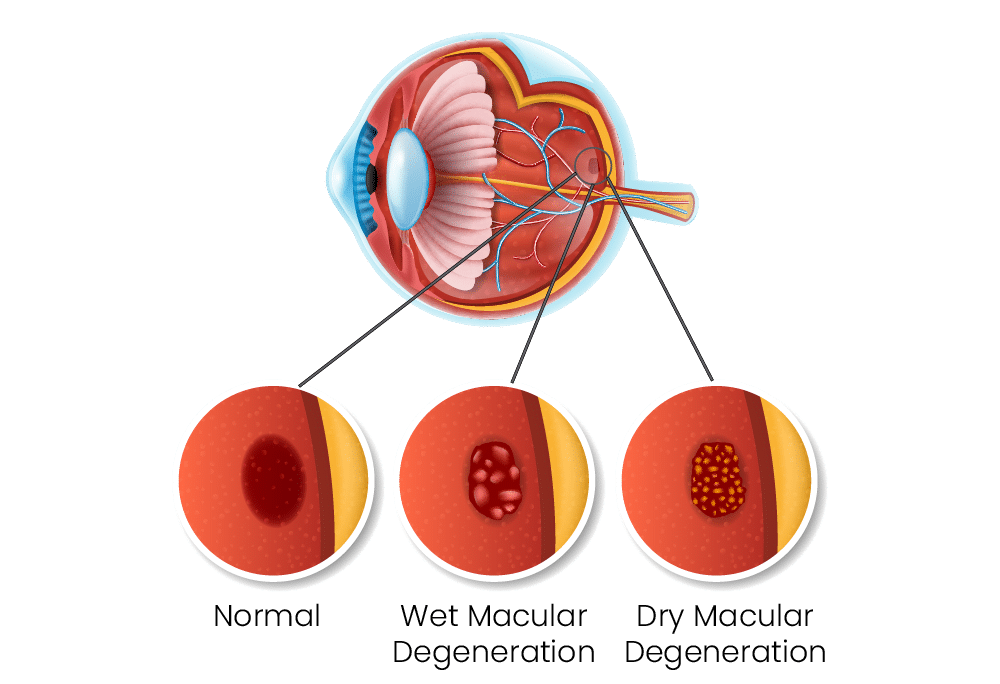
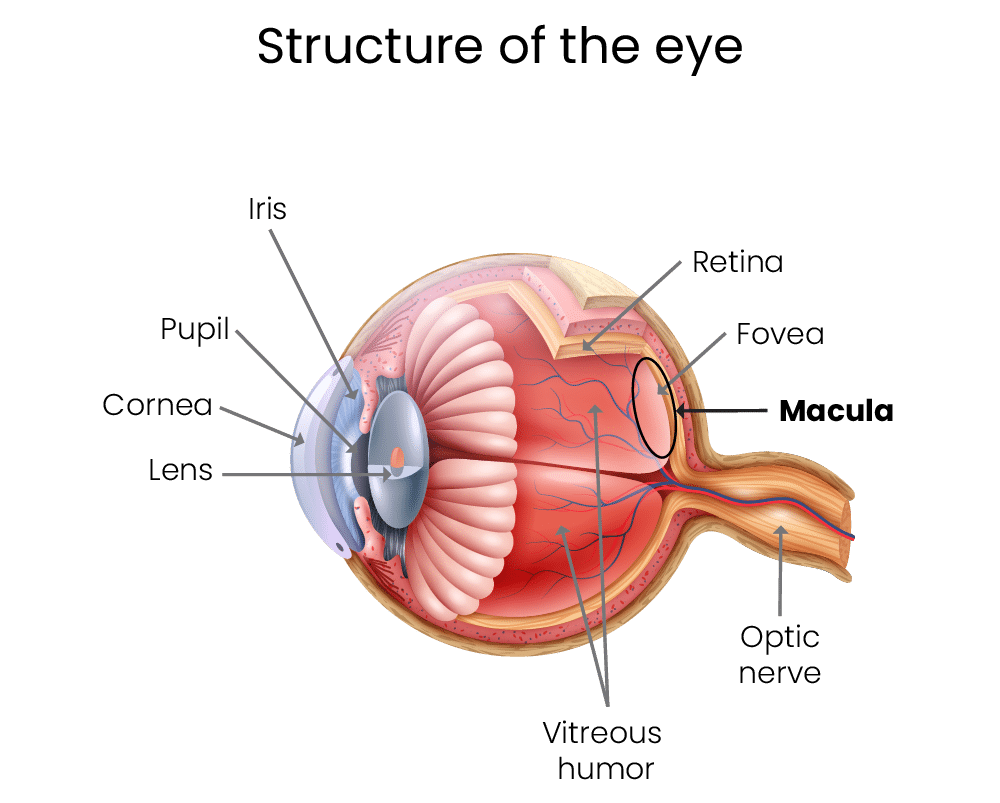
The macula is the central part of the retina, and is responsible for sharp central vision. AMD affects this area and degrades vision.

What are the symptoms of macular degeneration?
- Loss of central vision over time
- Blurry, wavy or dark spot in the central vision
- Peripheral vision remains intact
- Impact on one or both eyes.
You may not have any symptoms at all in the early stages of AMD. But as it progresses, you may experience distortion or wavy lines in your central vision. This can progress to central vision loss.
Types of macular degeneration
There are two types of AMD: Dry and Wet. In Dry AMD there is a build up of pale yellow waste material called drusen under the macula. These can impact vision and can cause macular cells to die (atrophy) in areas and cause central vision changes. In Wet AMD, symptoms can be a more sudden onset if left untreated and can lead to central vision loss much faster. It is caused by blood vessels that grow under the macula and leak fluid or blood. This can lead to a macular scar forming, which impairs central vision.
What causes macular degeneration?
There are a number of known risk factors for macular degeneration.
- Age
- Smoking
- Obesity
- Lack of regular eye examinations
- Family history
- High blood pressure
- Poor diet, low in antioxidants
How we treat macular degeneration
There is no cure for macular degeneration but there are ways that have been shown to slow its progression.
Do you have a question or concern about your eye health?
To discuss your condition with an experienced ophthalmologist or optometrist, please contact The Eye Health Centre.
¹ mdfoundation.com.au/about-macular-disease/age-related-macular-degeneration/amd-overview