
What is glaucoma?
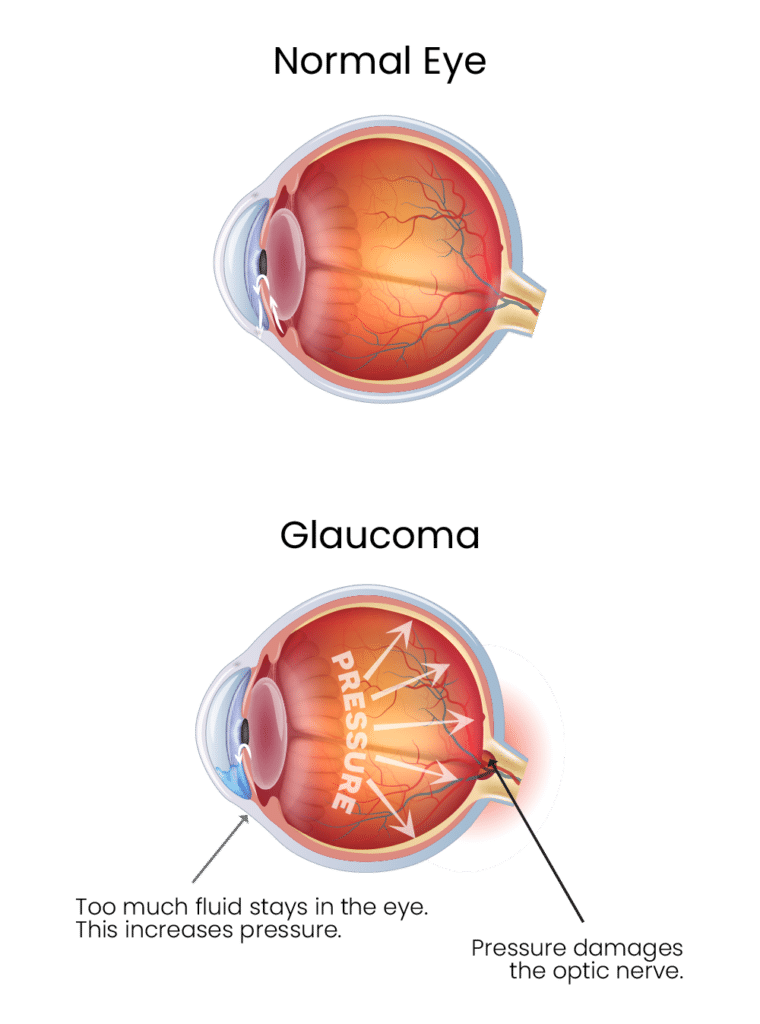
Glaucoma is a group of diseases that affect the optic nerve, which is the nerve that communicates information from the eye to the brain. Commonly known as “the silent thief of sight,” the initial vision loss is mainly peripheral and is not readily noticeable. Central vision and reading vision are usually spared until later. Therefore, you may remain asymptomatic until later in the disease process when most of the vision has already been irreversibly lost. Most, but not all of these diseases are characterised by raised pressure in the eye (intraocular pressure) which causes characteristic optic nerve damage, resulting in irreversible loss of vision. However, the level of this pressure that causes damage can vary in different individuals.
To understand glaucoma, traditionally a healthy eye constantly produces fluid to keep itself nourished, and has a built-in drainage system for fluid to exit the eye. If the eye produces too much fluid, or the drainage system malfunctions, fluid can build up and cause an increase in pressure inside the eye. Eventually, the pressure can damage the optic nerve and lead to permanent, irreversible vision loss.
What are the types of glaucoma?
How is glaucoma detected and managed?
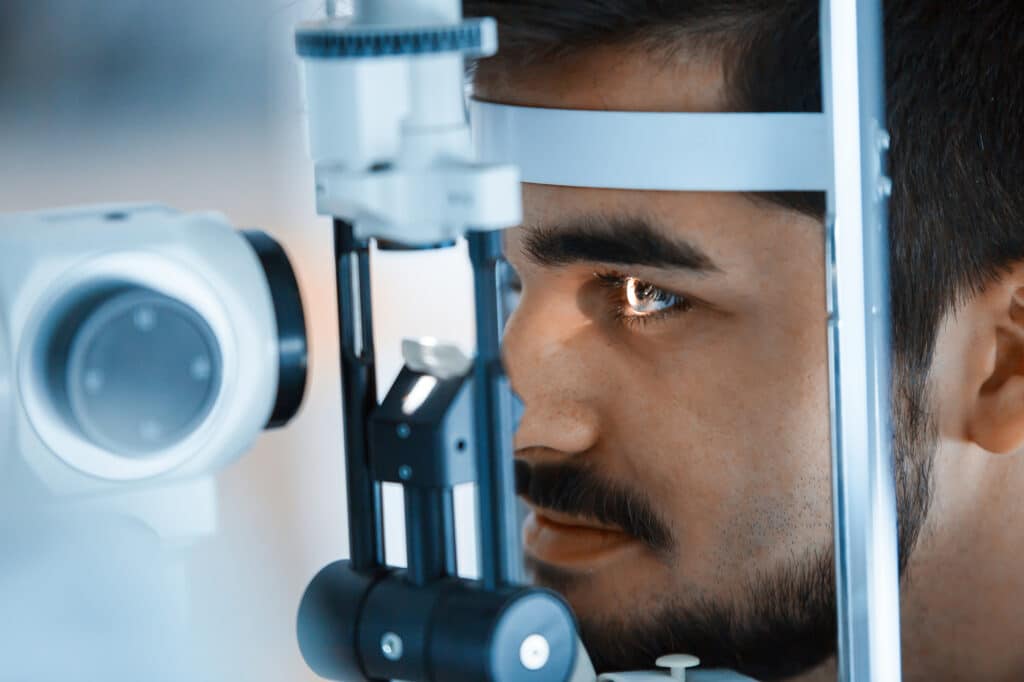
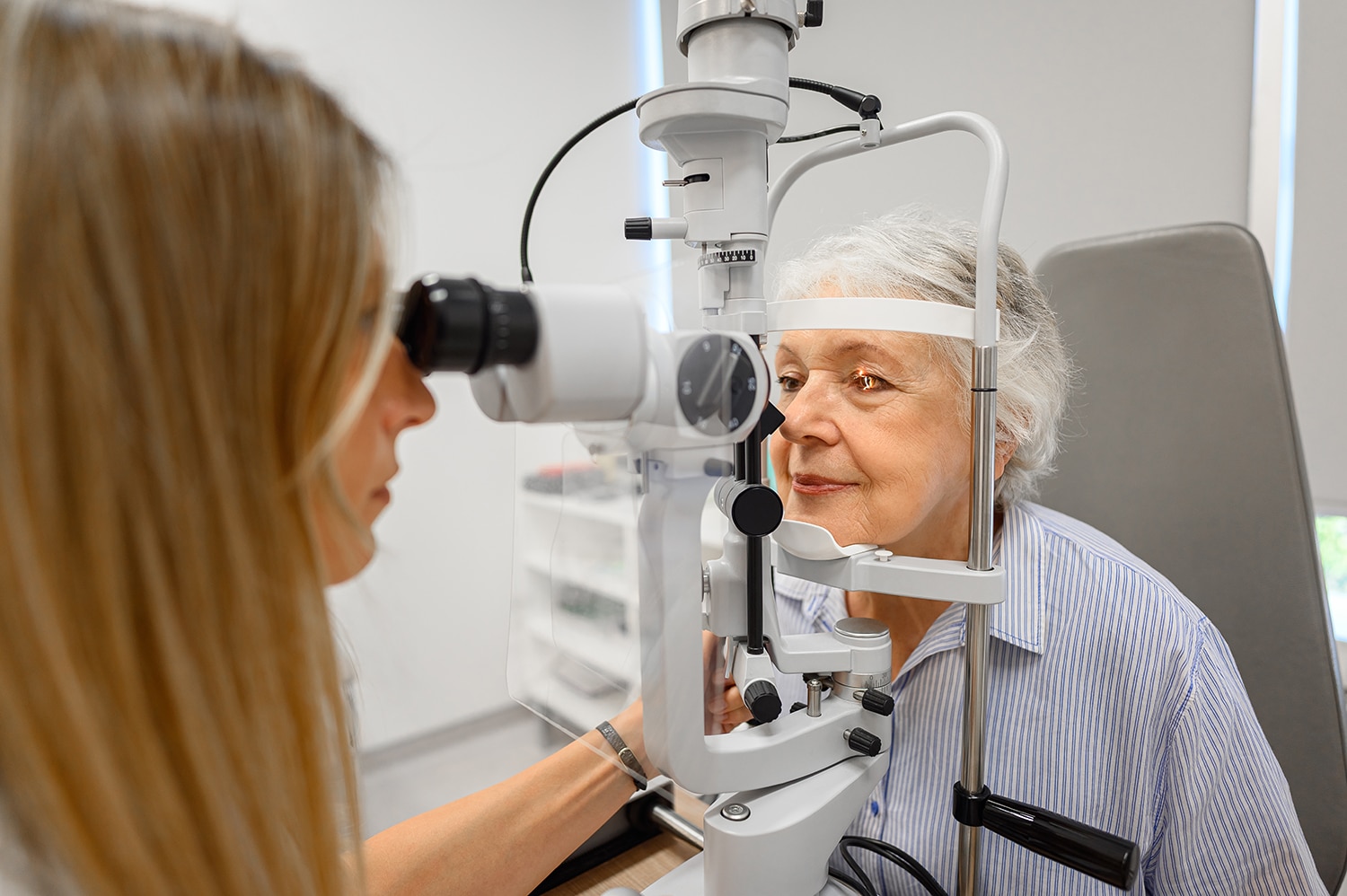
The intraocular pressure of the eye is measured and the optic nerve at the back of the eye is assessed for any damage. A visual field test (peripheral vision test) is often performed along with an OCT (optical coherence tomography) scan which objectively measure any areas of damage to the optic nerve.
These instruments are invaluable in providing baseline measurements for follow-up and help detect disease progression and hence, they’re often performed routinely at your eye specialist or optometrist reviews.
How do we treat glaucoma?
Treatment for glaucoma consists of medication such as eye drops, laser therapy or even surgery. The treatment will depend on the individual and the type & severity of the glaucoma. It is important to note that the aim of glaucoma treatment is to preserve the remaining vision. Damage from glaucoma cannot be reversed and thus, this chronic condition requires life-long review.
Frequently Asked Questions
Do you have a question or concern about your eye health?
To discuss your condition with an experienced ophthalmologist or optometrist, please contact The Eye Health Centre.